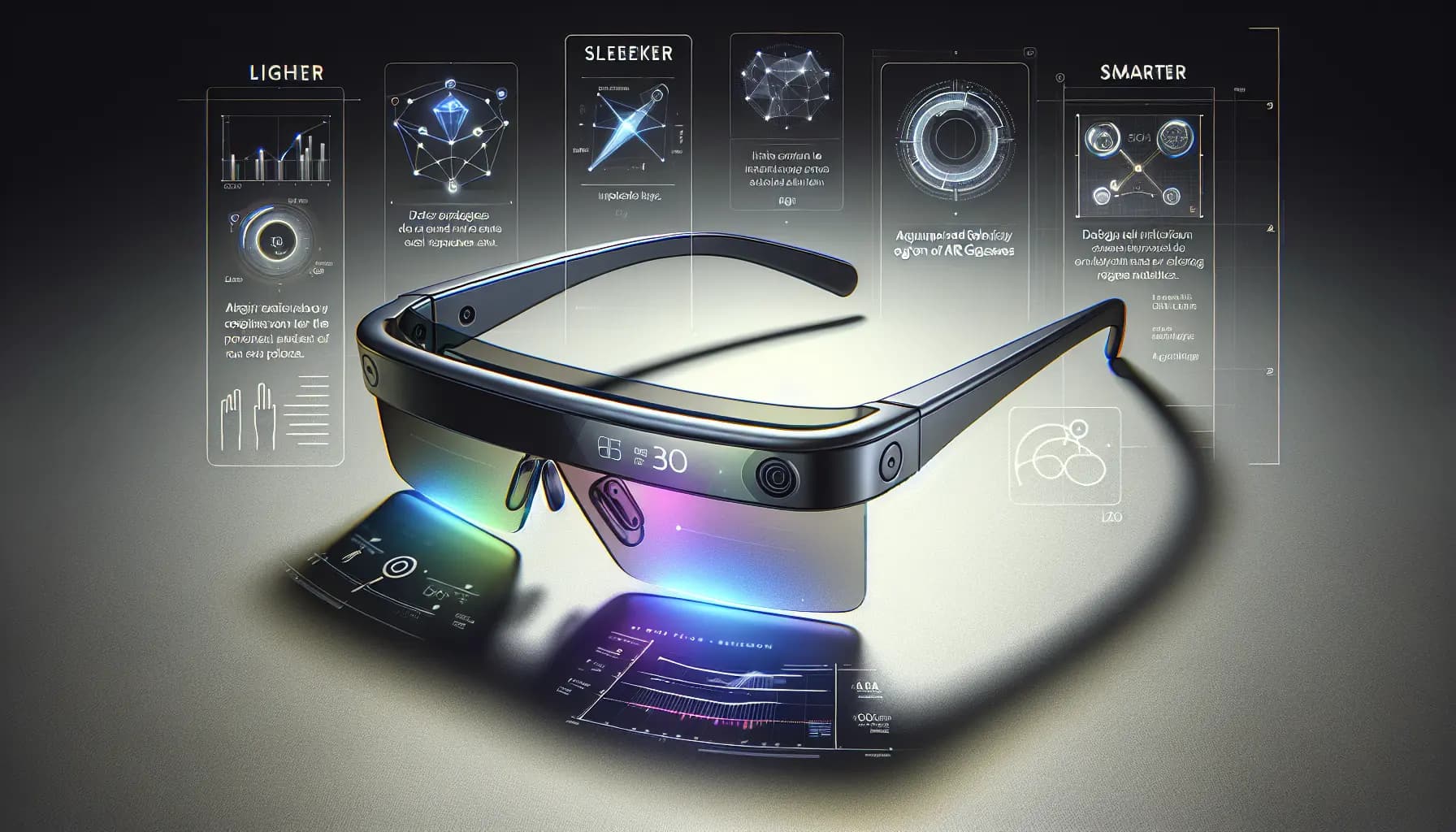
Lighter, Sleeker, Smarter: The Design Evolution of AR Glasses
Augmented Reality (AR) glasses have long promised a future where digital information seamlessly blends with the real world. While early prototypes were bulky, clunky, and limited in functionality, the industry is witnessing a dramatic evolution towards lighter, sleeker, and smarter designs that are increasingly appealing to consumers. This article explores the key trends driving this transformation and what we can expect from the next generation of AR wearables.
The Dark Ages of AR: From Head-Mounted Computers to Potential Eyesores
Remember the early days of AR? Think Google Glass. While groundbreaking in concept, its design was… divisive. The bulky frame, prominent prism, and limited battery life made it a novelty item rather than a mainstream product. Other early AR headsets suffered from similar issues:
- Weight: Early devices were heavy, causing discomfort during extended use.
- Aesthetics: Bulky and futuristic designs clashed with everyday fashion.
- Functionality: Limited field of view and low processing power hindered practical applications.
- Battery Life: Short battery life restricted usability and convenience.
These limitations highlighted the need for a fundamental shift in design philosophy, moving away from simply packing technology onto the face and towards creating truly wearable and user-friendly devices.
The Turning Point: Miniaturization and Material Science
The past few years have seen significant advancements in miniaturization, driven largely by the smartphone industry. These advancements are directly impacting AR glasses design in several crucial ways:
- Smaller Components: Micro-OLED displays, waveguides, and processors are enabling significantly smaller and lighter form factors.
- Advanced Materials: Lightweight materials like titanium and carbon fiber are replacing bulky plastics, enhancing both comfort and aesthetics.
- Improved Optics: Waveguide technology is becoming more efficient, allowing for wider fields of view in slimmer designs.
- Edge Computing: Offloading processing to nearby devices (smartphones, dedicated hubs) reduces the computational burden and heat generation within the glasses themselves.
These technological breakthroughs are paving the way for AR glasses that look and feel more like regular eyeglasses.
Key Design Trends Shaping the Future of AR
Several key design trends are currently shaping the evolution of AR glasses:
- Discreet Form Factors: The focus is on creating devices that blend seamlessly into everyday life. Think sleek, minimalist designs that don't scream augmented reality. Many companies are working on designs that resemble regular glasses or sunglasses.
- Prescription Lens Integration: The ability to seamlessly integrate prescription lenses is crucial for widespread adoption. This requires partnerships with optical companies and innovative lens manufacturing techniques.
- Ergonomics and Comfort: Comfortable wear is paramount. Manufacturers are paying close attention to weight distribution, nose bridge design, and temple arm adjustability.
- Enhanced User Interface: Intuitive and seamless interaction is key. This includes improvements in voice control, gesture recognition, and eye tracking.
- Focus on Specific Use Cases: Rather than trying to be everything to everyone, some companies are focusing on specific applications, such as enterprise, healthcare, or gaming, tailoring their designs accordingly.
Examples of Innovative AR Glasses Designs
Several companies are pushing the boundaries of AR glasses design:
- Ray-Ban Meta Smart Glasses: A partnership between Meta and Ray-Ban, these glasses offer a stylish design with integrated cameras and audio for capturing and sharing content. While not a fully-fledged AR headset, they represent a step towards more mainstream acceptance.
- XREAL Air: Focusing on entertainment, the XREAL Air glasses offer a large virtual display for watching movies and playing games. Their lightweight design and compatibility with various devices make them a popular choice for immersive media consumption.
- Magic Leap 2: Targeting enterprise applications, the Magic Leap 2 offers a wider field of view and improved tracking capabilities. Its design emphasizes functionality and durability for professional use cases.
Challenges and Future Directions
Despite significant progress, challenges remain in the design of AR glasses:
- Battery Life: Extending battery life without compromising size and weight is a constant challenge.
- Heat Management: Efficiently dissipating heat generated by processing components is crucial for comfort.
- Display Technology: Improving display brightness, resolution, and contrast is essential for a seamless AR experience.
- Cost: Making AR glasses affordable for the average consumer is critical for mass adoption.
The future of AR glasses design lies in continued innovation in materials science, miniaturization, and user interface design. We can expect to see even lighter, sleeker, and more capable devices that seamlessly integrate into our daily lives, blurring the lines between the physical and digital worlds. The evolution continues, and the next chapter promises to be even more exciting.